

How to Choose a Rhythmic Gymnastics Ball
The complete guide to sizes and brands — everything you need to know to choose the right rhythmic gymnastics ball, for training and competition alike.
Whether your gymnast is about to buy her very first ball or is moving up to a competition model, the choice matters more than you might think. The wrong size hampers technique. The wrong material affects grip. And a ball that isn't FIG-approved can cost a penalty in competition.
This guide covers the essentials: sizes, materials, brands, FIG approval, care, and what to look for at each level.
What size rhythmic gymnastics ball should you choose?
Rhythmic gymnastics balls come in two main sizes, depending on the gymnast's age and competition level.
Junior balls (15–17 cm)
Junior balls measure between 15 and 17 cm in diameter. They are designed for young gymnasts — usually under 10, or in preparatory and development categories. The smaller diameter and lighter weight make it easier for small hands to control the ball during rolls, throws and catches.
Under 7, a 15–16 cm ball is generally the right choice. Between 8 and 10, a 16–17 cm ball is a better fit, depending on hand size and the coach's recommendations.
Senior balls (18–18.5 cm)
Senior balls measure 18 to 18.5 cm in diameter and weigh at least 400 grams. This is the standard size for all competitive gymnasts from regional level upwards, and the only size permitted by FIG (Fédération Internationale de Gymnastique) rules in the senior category.
As soon as a gymnast moves beyond beginner level — often around the age of 10 or 11 — switching to a senior ball is a must. Training early with the right size builds the reflexes and handling quality needed in competition.
Size guide
| Age / level | Diameter | Weight | Use |
|---|---|---|---|
| Under 7 / beginner | 15–16 cm | approx. 300 g | First ball, recreational classes |
| 8–10 years / development | 16–17 cm | approx. 350 g | Club training, first competitions |
| 11 and over / regional and above | 18–18.5 cm | 400 g minimum | Training and competition |
Good to know: if you are torn between two sizes, choose the larger one. It is better to grow into a competition ball than to pick up habits with a ball that is too small.
What are rhythmic gymnastics balls made of?
Modern RG balls are made from high-quality rubber or synthetic compounds. The material has to strike a precise balance: enough grip that the ball doesn't slip during body rolls, enough bounce for controlled throws, and enough durability to withstand daily training on the carpet.
Finishes vary from model to model:
- Plain / matt — classic solid colours with a smooth surface. Good grip and an understated look. Widely used for training.
- Metallic — a fine metallic powder is worked into the surface, creating a reflective effect. Sasaki's Metallic and Magnetic ranges are renowned for this finish.
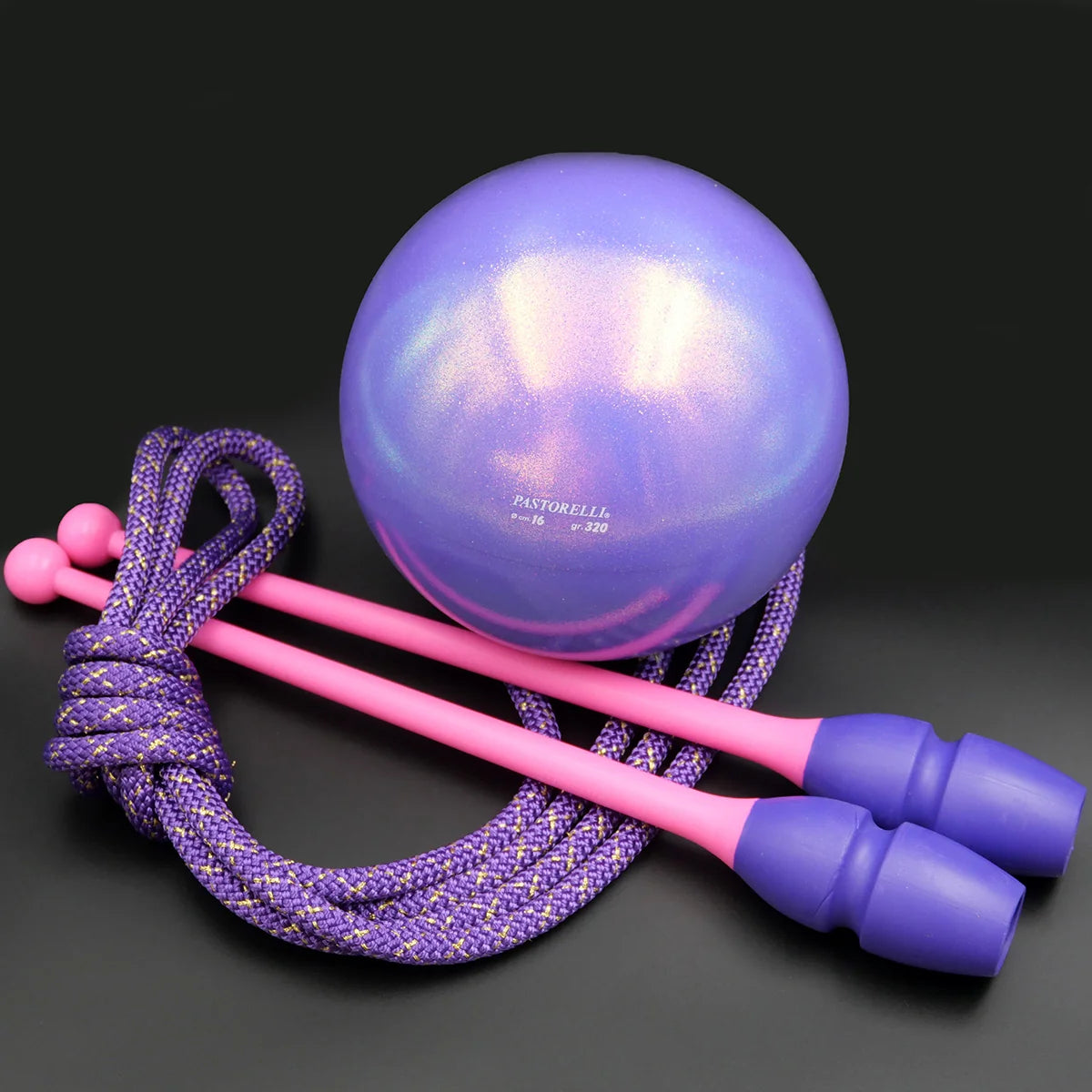
- Glitter — glitter is mixed into or applied to the rubber. Pastorelli's Glitter High Vision balls are among the most popular.
- Galaxy / gradient — multicoloured effects blending two or more shades across the surface. Spectacular under competition lighting.
The finish is above all a matter of looks: among the established brands, all of them offer comparable grip and performance. Many gymnasts choose a colour that matches their leotard and music, for a coherent presentation in competition.
Which brand should you choose?
Five major brands dominate the RG ball market. All of them are used at the highest level, and the choice often comes down to personal preference, feel in the hand and budget.
Sasaki
A Japanese brand with a long history in rhythmic gymnastics. Its balls are renowned for their excellent grip and distinctive colours — the Meteor, Aurora and Magnetic ranges offer highly recognisable metallic and colour-shifting effects. Sasaki senior balls measure 18.5 cm and are FIG-approved. A premium brand, very popular with competitive gymnasts.
Pastorelli
An Italian brand and one of the most widely used in RG worldwide. The High Vision range is a competition staple, available in plain, glitter and gradient glitter. Pastorelli balls are known for their reliable grip, consistent bounce and excellent shape retention. The 18 cm senior and 16 cm junior balls are FIG-approved where stated.
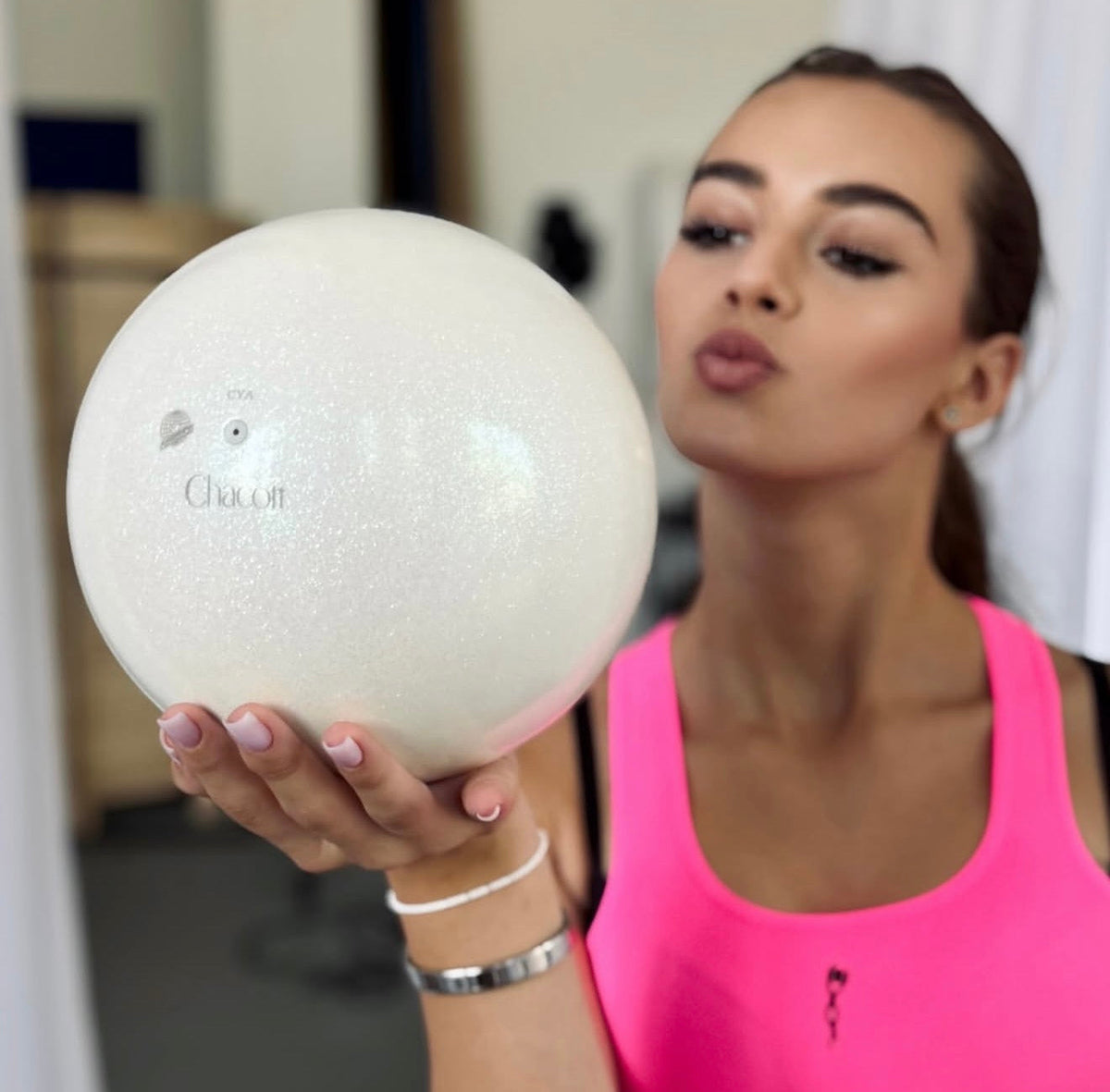
Chacott
Another Japanese brand, Chacott makes balls renowned for their precision and quality. Its rubber compound has a distinctive feel that some gymnasts prefer. A wide choice of colours, with FIG approval in competition sizes.
Amaya
A Spanish manufacturer offering competition-quality balls at a more affordable price. Its FIG-approved 18 cm balls are a popular choice for gymnasts looking for quality without the premium price tag of the Japanese brands.
Venturelli
An Italian brand behind the Star Line and Star Line Elite ranges, both FIG-approved in 18 cm. Known for its vibrant colours and a good balance between grip and durability, it is a solid mid-range option.
The brands at a glance
| Brand | Origin | Senior size | Known for |
|---|---|---|---|
| Sasaki | Japan | 18.5 cm | Premium finishes, metallic effects |
| Pastorelli | Italy | 18 cm | Widest choice of colours, reliable grip |
| Chacott | Japan | 18 cm | Precise feel, rubber quality |
| Amaya | Spain | 18 cm | Good value for money |
| Venturelli | Italy | 18 cm | Vibrant colours, Star Line range |
Do you need a FIG-approved ball?
If your gymnast competes at regional level or above — FFG national competitions, European championships, or any FIG-sanctioned competition — then yes, a FIG-approved ball is required. Using a ball that isn't approved can lead to a penalty, or even disqualification.
For recreational classes, school gymnastics or the very first development levels, FIG approval isn't necessary. A good-quality junior ball from a recognised brand is enough.
When buying, look for the words "FIG-approved" in the product description. The senior-size balls from all five brands above are FIG-approved, but not every colour or junior size is — always check, and consult your federation's rules.
How to look after your RG ball
A good ball is an investment: proper care significantly extends its life.
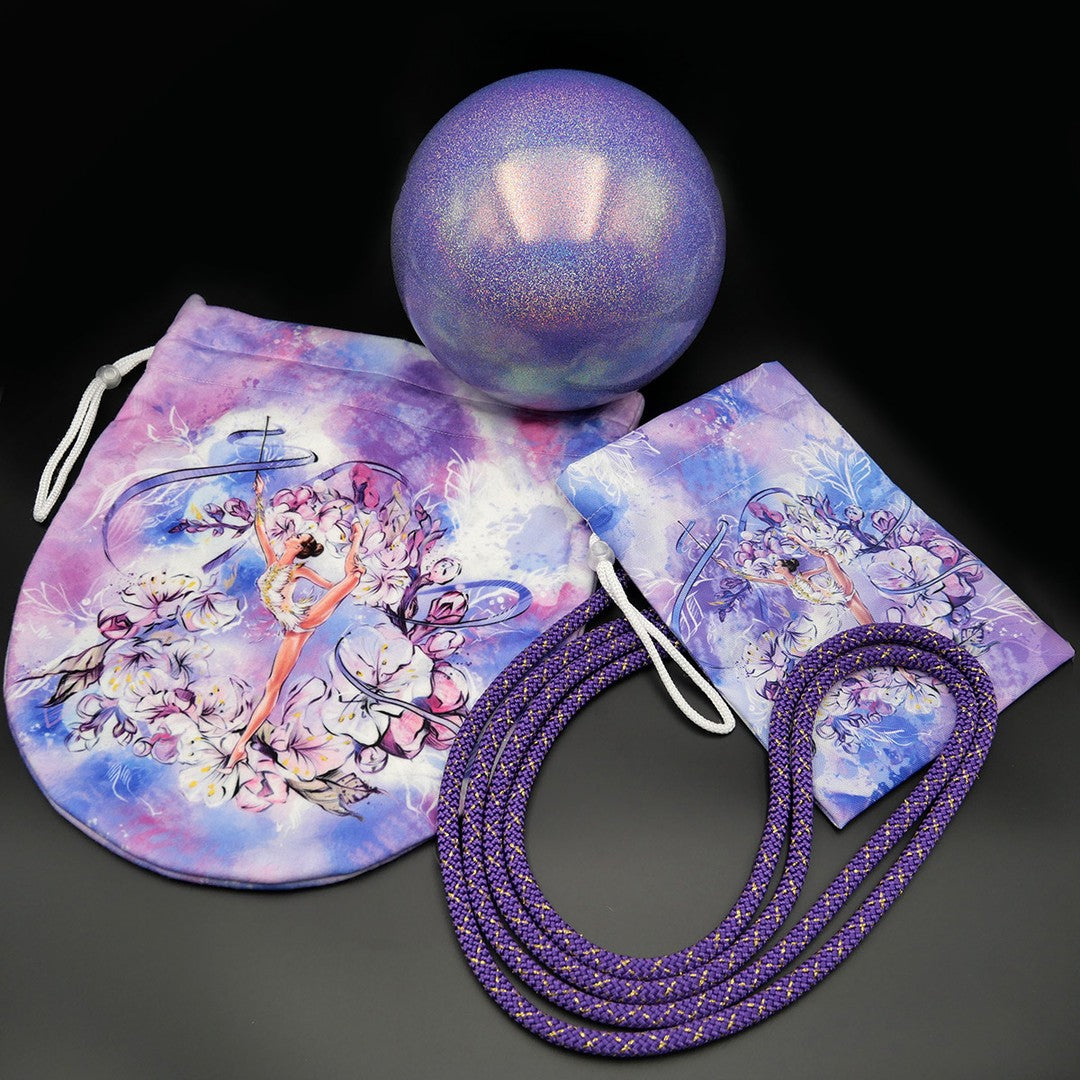
Storage — always put the ball back in a protective cover after use. This prevents scratches, scuffs and colour transfer from other items in the bag. Keep it at room temperature and avoid leaving it in a hot car or in direct sunlight.
Inflation — only inflate with the pump recommended by the manufacturer. Before inserting the needle, apply silicone grease to it: a dry needle can damage the valve. Don't over-inflate — the ball should match its stated diameter and give very slightly under pressure.
Long-term storage — if storing the ball for more than a few days, deflate it slightly. This reduces stress on the seams and helps it keep its shape over time. Never store or transport it completely deflated.
Cleaning — wipe with a soft cloth dampened with warm soapy water. Avoid solvents, alcohol-based cleaners and abrasive cloths. Dry thoroughly before putting the ball back in its cover.
Surfaces — only use the ball on a rhythmic gymnastics carpet. Rubber flooring, lino, concrete and outdoor surfaces damage the finish.
What should you buy with a ball?
- A ball cover — protects against scratches in transit. Most brands offer them in matching or neutral colours.
- A pump — ideally use a pump from the same brand as the ball.
- Silicone valve grease — a small tube to protect the valve when inflating. Inexpensive, but important.
Ready to choose?
Discover our full collection of rhythmic gymnastics balls — junior and senior sizes.
Not sure which ball is right for your gymnast? Get in touch — we'll be happy to help.